
Forty Days of Fire: The Iran War America Was Never Asked About
The joint American and Israeli campaign against Iran that began in late February brought 650 Iranian missiles down on Israeli cities, killed civilians in shelters, and ended in an April ceasefire that settled nothing.

By Media Mogul World Desk · World Bureau
· 2 min read
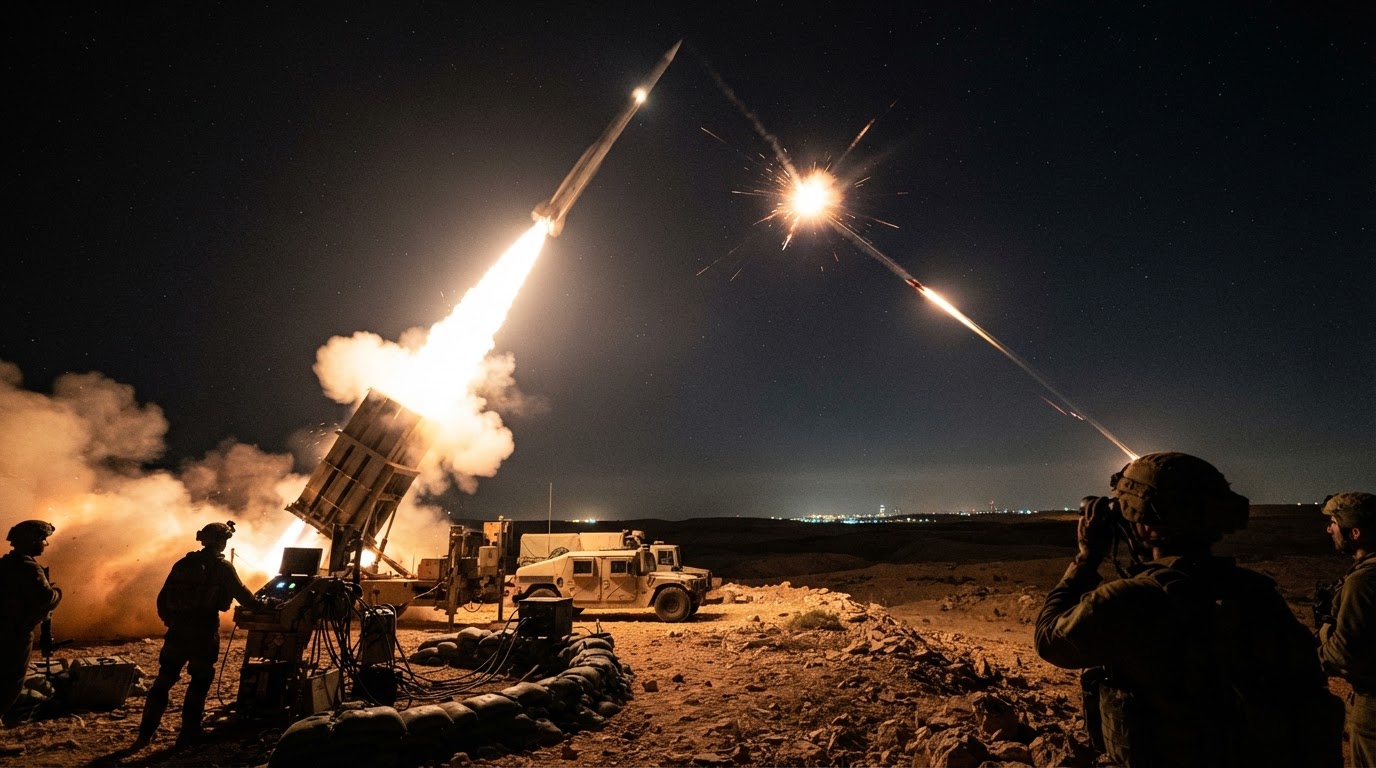
The ceasefire took hold on April 8, and the numbers it left behind deserve to be read slowly. Over a war of roughly 40 days, Iran fired around 650 missiles at Israel. By the time the guns paused, 24 Israeli civilians were dead and more than 7,000 people had been injured. Within weeks the death toll had climbed to 28, including four Palestinians killed in the West Bank.
The war began on February 28, when the United States and Israel launched joint strikes on Iranian military sites. President Trump stated that the goal was regime change and the termination of Iran's nuclear program. In the opening phase of the campaign, Supreme Leader Ayatollah Ali Khamenei was killed in Tehran, and Iranian security chief Ali Larijani was killed in an Israeli airstrike on March 17.
Iran's retaliation fell hardest on ordinary people. The deadliest single strike came on March 1, when an Iranian missile hit a synagogue shelter in Beit Shemesh and killed nine civilians. More than half of Iran's missiles carried cluster munitions, and Amnesty International condemned their use in populated areas as a violation of international humanitarian law, calling specific strikes war crimes.
Israel's layered defenses, from Arrow to David's Sling to Iron Dome, stopped the overwhelming majority of what came in. Roughly 16 missiles penetrated. Even so, four civilians died in a Haifa building collapse after a failed interception on April 5, an 11 year old girl in Bnei Brak was mortally wounded by a cluster bomb on April 1, and shrapnel damaged holy sites in Jerusalem's Old City, including the Temple Mount, the Church of the Holy Sepulchre, and the Jewish Quarter.
The nuclear question escalated in the middle of it all. On March 21, American bunker buster bombs struck Iran's Natanz nuclear facility. Iran answered by attacking Dimona and Arad, the towns near Israel's own nuclear research center, wounding 118 people between them.
Now for the question this outlet exists to ask. Where was Congress? A war launched with the declared aim of overthrowing a foreign government, fought partly with American bombs against nuclear facilities, is exactly the kind of decision the Constitution reserves for the people's representatives. It was made without them.
We hold no brief for the Iranian regime, which rained cluster bombs on apartment blocks and synagogues. But regime change wars are a product this country has bought before, and the receipts from Iraq and Libya are still in the drawer. Nobody who cheered those wars in their first 40 days enjoyed their next 40 months.
The ceasefire of April 8 is welcome. It is also fragile, unratified by any settlement, and shadowed by the same unanswered question that started the war. America First means America decides, in the open, through Congress, before the missiles fly. Not after.
Sources
Questions readers ask
What is Media Mogul News?
Media Mogul News is an independent, reader-supported news site led by Chief Editor Nate Jurewicz. We cover the stories corporate media skips: political corruption, Big Pharma, the deep state, election integrity, cannabis freedom, crypto and the money behind all of it.
What is your political stance?
We are pro-liberty, pro-cannabis, anti-war and anti-corruption, and we hold both parties to the same standard. We are not a party outlet. When the people we agree with get something wrong, we say so.
How is Media Mogul funded?
By readers. We take no pharmaceutical advertising and no money from the industries we cover. Support comes from newsletter readers, donations and Media Mogul merchandise.