
Crypto's Big Rulebook Races A Senate Deadline As August 10 Looms
The CLARITY Act would finally tell 2.28 trillion dollars in digital assets who their regulator is, if the Senate can act before recess.

By Media Mogul Money Desk · Money Bureau
· 2 min read
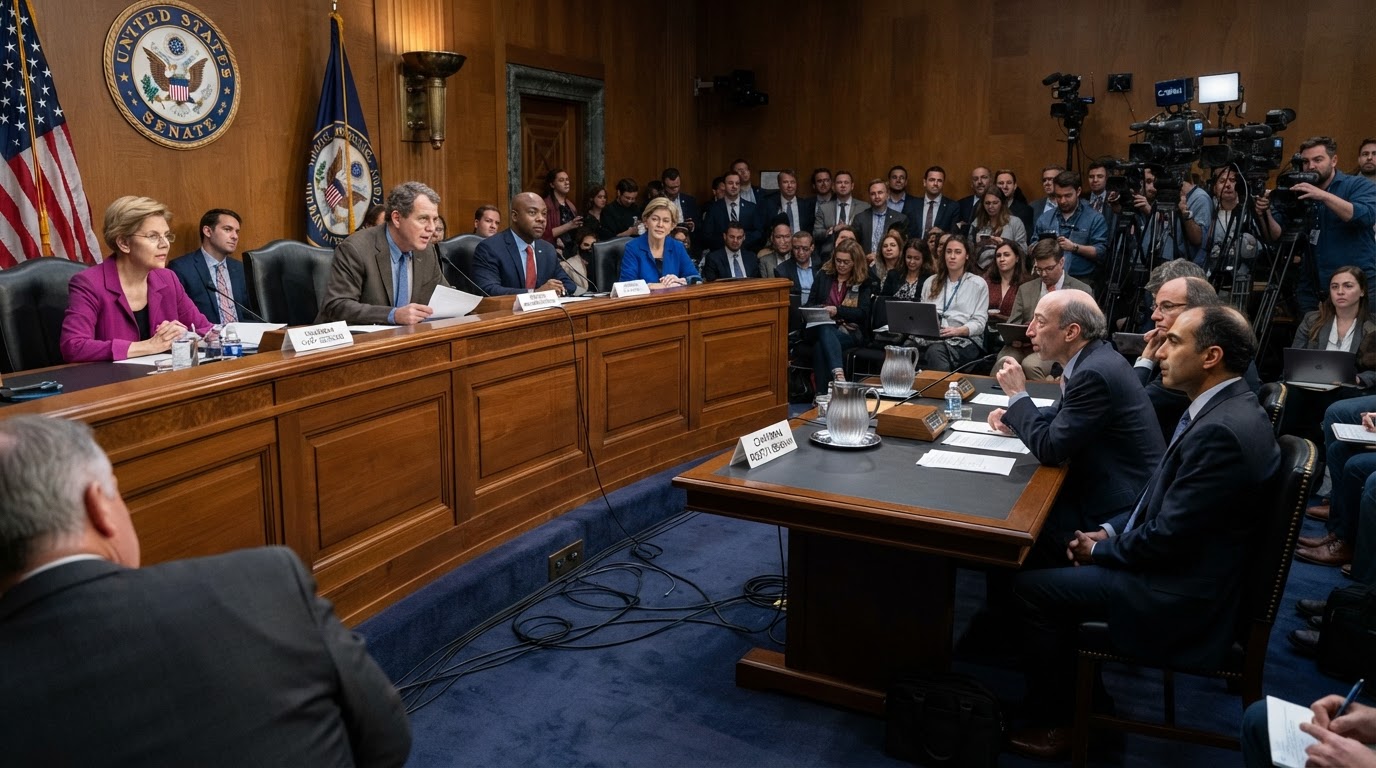
The crypto industry is staring at the calendar. August 10 marks the start of the Senate's summer recess, and if the Digital Asset Market Clarity Act does not move before senators skip town, the biggest crypto legislation in American history loses its momentum, with the last real workday falling on August 7.
Here is what the CLARITY Act actually does, in plain English. It finally answers the question that has haunted digital assets for a decade: who is in charge? The bill divides oversight between the Securities and Exchange Commission and the Commodity Futures Trading Commission, sets rules for crypto exchanges and token issuers, and lets the CFTC regulate spot markets for digital commodities. For an industry worth about 2.28 trillion dollars, including some 305 billion dollars in stablecoins, that is the difference between building in America and building offshore.
The bill is not some fringe project. The House passed its version, H.R. 3633, back on July 17, 2025 by a vote of 294 to 134, with every Republican and 78 Democrats on board. In the Senate, the Agriculture Committee approved its version in January and the Banking Committee followed on May 14 with a 15 to 9 vote, including two Democrats. Real bipartisan support, which in today's Washington is rarer than a balanced budget.
So what is the holdup? The two Senate committee versions still have to be reconciled into one bill before a floor vote. That is the swamp at work. Both chambers agree on the destination, majorities in both parties agree, and yet the process grinds on while entrepreneurs and investors sit in legal limbo.
The stakes for regular Americans are bigger than the price of any coin. For years, regulators ran crypto policy by lawsuit, punishing companies for breaking rules that were never written down. That approach chased jobs, capital, and innovation overseas. Clear rules passed by elected legislators, not unelected agency lawyers, are how a free country is supposed to work, whatever you think of crypto itself.
Bitcoin itself would see the least change from the bill, since it already sits in the commodity bucket. The bigger impact lands on the exchanges, token projects, and DeFi platforms that have operated under a cloud of regulatory ambiguity.
The market backdrop shows why the industry is desperate for certainty. Bitcoin crashed below 58,000 dollars on July 1 after a late June selloff flushed out leveraged traders, then clawed back to finish July around $63,836, up roughly 7.5 percent for the month even as the Federal Reserve turned hawkish and Wall Street's AI trade wobbled. Analysts at Bitfinex noted crypto held up better than leveraged stock bets because the fuel for forced selling had already burned off in the June washout. Volatile prices plus vague rules is a combination that keeps serious capital on the sidelines.
Miss the deadline and the bill does not die, but it drifts into the fall with an election year looming, and everyone in Washington knows what happens to hard votes in an election season. The industry that was promised America would be the crypto capital of the world is about to find out whether the Senate can deliver or whether it is all talk.
Sources
- https://bitcoinfoundation.org/news/regulation/clarity-act-whats-next-why-aug-10-could-be-cryptos-biggest-deadline-in-2026/
- https://www.fool.com/investing/2026/07/06/the-chances-of-the-clarity-act-passing-this-year-a/
- https://finance.yahoo.com/markets/crypto/articles/happens-bitcoin-crypto-clarity-act-144215048.html
- https://www.coindesk.com/markets/2026/07/31/bitcoin-holds-onto-july-gain-as-forced-selling-fuel-was-already-spent-analysts-say
Questions readers ask
What is Media Mogul News?
Media Mogul News is an independent, reader-supported news site led by Chief Editor Nate Jurewicz. We cover the stories corporate media skips: political corruption, Big Pharma, the deep state, election integrity, cannabis freedom, crypto and the money behind all of it.
What is your political stance?
We are pro-liberty, pro-cannabis, anti-war and anti-corruption, and we hold both parties to the same standard. We are not a party outlet. When the people we agree with get something wrong, we say so.
How is Media Mogul funded?
By readers. We take no pharmaceutical advertising and no money from the industries we cover. Support comes from newsletter readers, donations and Media Mogul merchandise.