
Nearly a Billion Dollars Gone: Inside the Hacks That Defined Crypto's First Half of 2026
The Kelp DAO and Drift Protocol exploits led a brutal stretch that drained close to one billion dollars, even as total theft fell sharply from last year.

By Media Mogul Crypto Desk · Digital Assets Bureau
· 2 min read
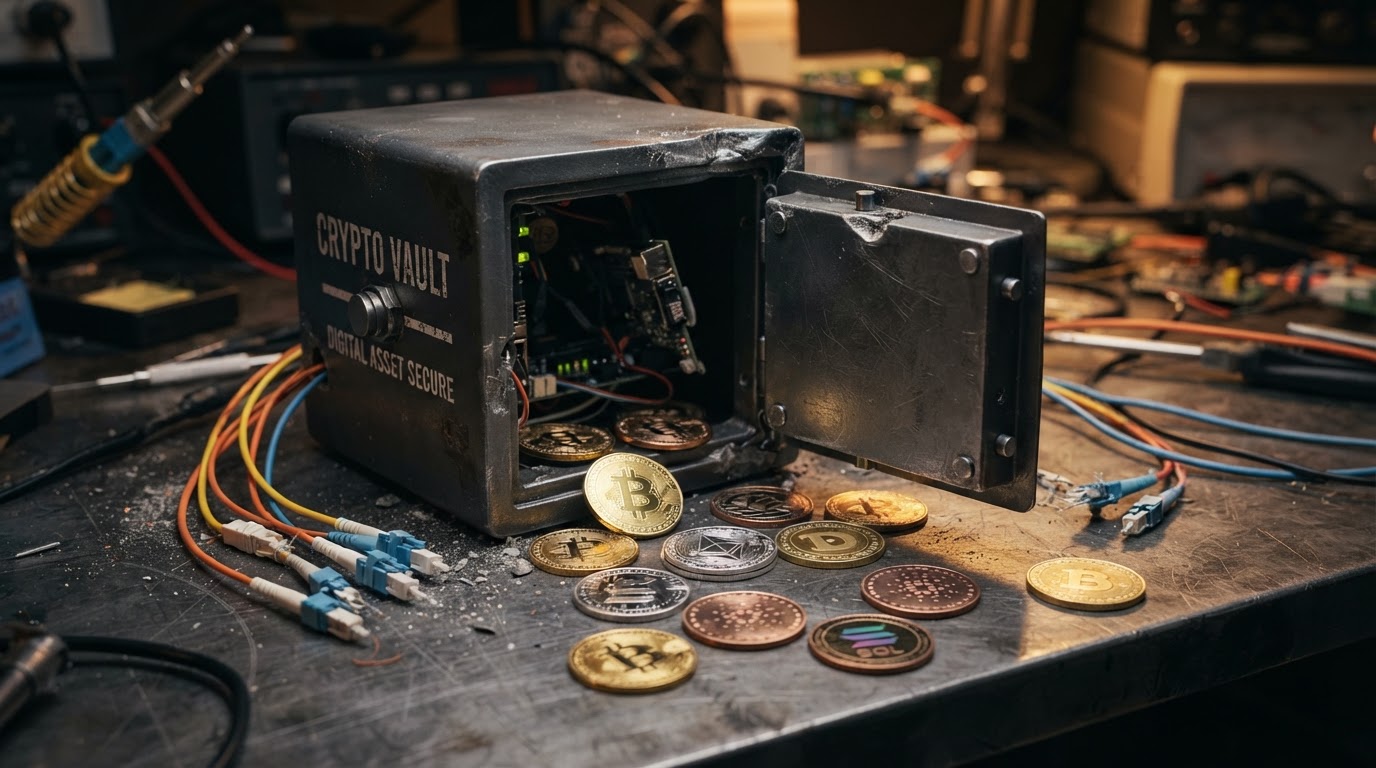
While Washington argues about who should regulate crypto, hackers spent the first half of 2026 answering a different question. Who is guarding the vaults? Too often, nobody.
Security researchers tracking the period counted 207 hacking incidents with roughly 972 million dollars stolen in the first six months of the year. There is a silver lining in that number, since it represents a drop of about 57 percent from the same period a year earlier. But the two biggest exploits of the year show how fast nine figures can vanish.
The largest came in mid April, when an attacker hit Kelp DAO, a liquid restaking protocol, for about 293 million dollars. According to postmortem reporting, the hacker tricked a cross chain messaging contract in the LayerZero system into accepting a fraudulent message, instructing Kelp's bridge to hand over 116,500 rsETH tokens, roughly 18 percent of the entire circulating supply. The attacker washed the trail through Tornado Cash. Kelp froze its contracts within hours, and lending giant Aave suspended rsETH markets to stop the contagion.
Two weeks earlier, on April 1, the Solana based trading platform Drift Protocol lost about 285 million dollars in an attack that leaned on social engineering aimed at users rather than a code flaw. April alone saw more than 605 million dollars taken across at least a dozen incidents in a span of 20 days. Other major victims this year included Step Finance and Humanity Protocol, both hit through leaked private keys, and Truebit, drained through a smart contract vulnerability. January had already set an ugly tone, with nearly 400 million dollars stolen in that month alone.
Notice what these attacks have in common. Not one required breaking the cryptography that secures blockchains. They exploited bridges, leaked keys, and human trust, the connective tissue the industry keeps bolting on in pursuit of yield and convenience.
Here is the accountability question this desk keeps asking. The industry has spent 193 million dollars and counting on political action committees this cycle, and its lobbyists fill every hearing room in Washington demanding regulatory clarity. Fair enough. But clarity for issuers does nothing for the user whose restaked ether disappeared through a spoofed bridge message. The pending market structure legislation says remarkably little about security standards, audits, or who eats the losses when a protocol holding half a billion dollars in customer assets gets popped.
To be fair, the falling totals suggest the industry is learning. Better monitoring, faster freezes, and coordinated responses like Aave's saved users from worse outcomes this spring. Decentralized systems cannot simply call the FDIC, and some builders take security deadly seriously.
Still, a market asking for the legitimacy of Wall Street should expect Wall Street grade scrutiny. Nearly a billion dollars in six months is not a rounding error. It is a warning.
Sources
- https://finbold.com/finbold-report-h1-2026-top-5-crypto-hacks/
- https://www.thestreet.com/crypto/markets/major-defi-hack-becomes-the-largest-of-2026-yet
- https://technext24.com/crypto/crypto-hacks-surge-stolen-funds-drop-h1-2026/
- https://finance.yahoo.com/news/crypto-theft-hit-nearly-400-180626234.html
Questions readers ask
What is Media Mogul News?
Media Mogul News is an independent, reader-supported news site led by Chief Editor Nate Jurewicz. We cover the stories corporate media skips: political corruption, Big Pharma, the deep state, election integrity, cannabis freedom, crypto and the money behind all of it.
What is your political stance?
We are pro-liberty, pro-cannabis, anti-war and anti-corruption, and we hold both parties to the same standard. We are not a party outlet. When the people we agree with get something wrong, we say so.
How is Media Mogul funded?
By readers. We take no pharmaceutical advertising and no money from the industries we cover. Support comes from newsletter readers, donations and Media Mogul merchandise.